

Hey there! As a supplier of tread aluminum coil, I often get asked about the surface roughness of these products. In this blog, I'm gonna break down what surface roughness is all about when it comes to tread aluminum coils, why it matters, and how it can impact your projects.
Let's start with the basics. Surface roughness refers to the irregularities on the surface of a material. For tread aluminum coils, these irregularities can come in various forms, like tiny peaks and valleys. It's not just about how the coil looks; it has a big impact on its performance and functionality.
When you're dealing with tread aluminum coils, the surface roughness is a crucial factor. You see, tread aluminum coils are commonly used in areas where slip resistance is a must. Think about industrial flooring, stair treads, and vehicle ramps. The right amount of surface roughness provides the necessary grip to prevent slips and falls, making these areas safer for people to walk or work on.
Now, you might be wondering how we measure the surface roughness of tread aluminum coils. Well, there are a few ways to do it. One common method is using a profilometer. This nifty little device measures the height variations on the surface of the coil. The results are usually expressed in micrometers (μm) or microinches (μin). A higher value means a rougher surface, while a lower value indicates a smoother one.
Another way to assess surface roughness is by visual inspection. You can look at the coil and get a general idea of how rough or smooth it is. However, this method is a bit subjective and might not give you an accurate measurement. That's why we usually rely on more precise methods like profilometry.
So, what's the ideal surface roughness for tread aluminum coils? Well, it depends on the application. For industrial flooring, you'll typically want a rougher surface to ensure maximum slip resistance. On the other hand, if you're using the coil for decorative purposes, a smoother surface might be more appropriate.
At our company, we understand that different customers have different needs. That's why we offer a wide range of tread aluminum coils with varying surface roughness levels. Whether you need a coil for a high - traffic industrial area or a more aesthetically pleasing project, we've got you covered.

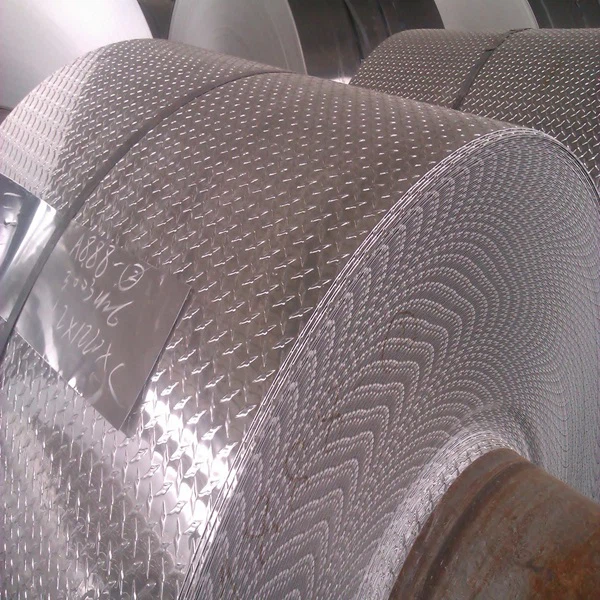
One of the factors that can affect the surface roughness of tread aluminum coils is the manufacturing process. During production, the coil goes through a series of steps, including rolling, embossing, and finishing. Each of these steps can influence the final surface roughness. For example, the embossing process is used to create the characteristic patterns on the coil, and the depth and shape of these patterns can determine the roughness.
The alloy of the aluminum also plays a role. Different aluminum alloys have different physical properties, which can affect how the surface behaves during manufacturing. Some alloys might be more prone to forming a rougher surface, while others can be finished to a smoother texture.
Now, let's talk about the benefits of having the right surface roughness for your tread aluminum coil. First and foremost, as I mentioned earlier, it improves safety. In industrial settings, where people are constantly moving around, a slip - resistant surface can prevent serious accidents. This not only protects your employees but also reduces the risk of liability for your business.
Secondly, the right surface roughness can enhance the durability of the coil. A rougher surface can distribute the load more evenly, reducing wear and tear. This means that your tread aluminum coil will last longer, saving you money in the long run.
In addition, the surface roughness can also affect the appearance of the coil. Depending on your project, you might want a more textured look for a rustic or industrial aesthetic, or a smoother finish for a more modern and sleek appearance.
If you're in the market for a tread aluminum coil, I highly recommend checking out our Tread Aluminum Coil options. We also have Diamond Aluminum Coil and Checkered Aluminum Coil in case you're interested in different patterns.
We're here to help you find the perfect coil for your project. Whether you need advice on the right surface roughness or have any other questions, our team of experts is just a message away. Don't hesitate to reach out if you're looking to make a purchase or just want to learn more. We can work together to ensure you get the best product for your specific needs.
In conclusion, surface roughness is a crucial aspect of tread aluminum coils. It affects safety, durability, and appearance, and choosing the right level of roughness is essential for the success of your project. As a trusted supplier, we're committed to providing high - quality products with the right surface characteristics. So, if you're in the market for tread aluminum coils, give us a shout, and let's start the conversation!
References:
- ASTM International standards on surface roughness measurement.
- Aluminum Association technical documents on aluminum coil manufacturing.