


Single Zero Aluminum Foil
What is Single Zero Aluminum Foil
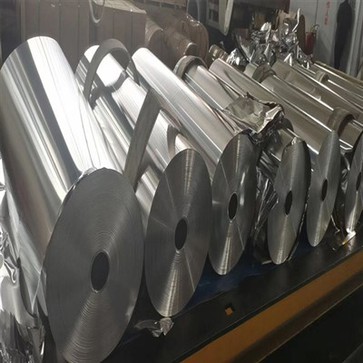
The single-zero foil is an aluminum foil having a thickness of 0.01 mm and less than 0.1 mm. Because of its excellent performance of aluminum foil, coupled with the continuous progress of production technology, the current aluminum foil is widely used in beverage packaging, flexible packaging, cigarette packaging, capacitors and construction industries.
Advantages of Single Zero Aluminum Foil
Excellent Barrier Properties
One of the standout features of aluminum foil is its exceptional barrier capabilities. Its dense structure effectively prevents the permeation of oxygen, which keeps food from oxidizing, and it also blocks moisture, thus reducing the risk of spoilage. Additionally, aluminum foil has excellent light-blocking properties, making it essential for light-sensitive pharmaceuticals and food products. Incorporating aluminum foil into composite materials significantly extends product shelf life, minimizes waste, and enhances market competitiveness.
Lightweight Design
The lightweight nature of aluminum foil offers numerous advantages in modern industry. By using aluminum foil as the outer or inner layer of composite materials, manufacturers can effectively reduce the overall weight of products. This is especially important in the aerospace and automotive industries, where weight reduction directly impacts fuel consumption and transportation efficiency. For electric vehicles and high-performance cars, lightweight materials contribute to better range and performance, promoting more sustainable transport solutions.
Excellent Processability
Aluminum foil's superior processability makes it an ideal choice for composite materials. It can be processed through various methods like stretching, curling, lamination, and printing, adapting easily to different design requirements. This flexibility allows manufacturers to quickly adjust product designs in response to market changes, meeting consumer needs. For instance, in the packaging industry, aluminum foil can be combined with other materials like plastic films to create multi-functional composites that enhance product marketability.
Corrosion Resistance and Durability
The inherent corrosion resistance of aluminum ensures that aluminum foil performs reliably in diverse environments. Whether in humid, acidic, or alkaline conditions, aluminum foil maintains its integrity, preventing corrosion and aging. This durability assures safe and reliable storage and transportation of products, reducing maintenance and replacement costs, especially in food and pharmaceutical packaging.




Why Choose US
Our Factory
Henan Everwin is located in Zhengzhou city, Henan province, China. We are a company dedicated to exporting aluminum rolled products, committed to providing high-quality and diversified aluminum rolled products to global customers.
Professional Team
Since the establishment of the company, we have always adhered to the business philosophy of "quality first, customer first". We have a professional team in the production, research and sales department, able to provide personalized product solutions according to customer needs.
Our Product
Our main products are aluminium sheet, aluminium coil, aluminium foil, aluminium circle and aluminium strip, which are widely used in various industries such as construction, transportation, electronics, and packaging. We strictly control product quality from raw material procurement to production processes to ensure that every product meets customer requirements and expectations.
Our Service
We can provide one-stop services from production packaging to land and sea transportation, as well as comprehensive product after-sales technical support, providing customers with thoughtful service support throughout the process.
Single Zero Aluminum foil A hot stamping material that is directly calendered into a thin sheet of metal aluminum. Its hot stamping effect is similar to that of pure silver foil stamping, so it is also called fake silver foil. Since aluminum has a soft texture and good ductility, it has a silvery white luster. If the calendered sheet is smashed on an offset paper with a material such as sodium silicate, an aluminum foil sheet can be formed. Aluminum foil is widely used in packaging materials for food, beverage, cigarette packaging, pharmaceuticals, photographic floor, household and daily necessities due to its excellent characteristics; electrolytic capacitor materials; thermal insulation materials for buildings, vehicles, ships, houses, etc.; Gold and silver lines, wallpapers, and various decorative labels for stationery and light industrial products.
In order to improve rolling efficiency and quality of aluminum foil products, modern aluminum foil rolling mills are developing in four directions: large volume, wide width, high speed and automation. The width of the roll of the contemporary aluminum foil rolling mill has reached more than 2200m, the rolling speed has reached more than 20m/min, and the coil weight has reached more than 20t. The corresponding level of rolling mill automation has also been greatly improved, the thickness control system (AGC) is generally installed, and most of them are equipped with a shape meter (AFC). The aluminum foil industry is facing a period of rapid development.
The aluminum foil can be divided into a Single -sided aluminum foil and a double-sided aluminum foil according to the surface state. 1 one-side light aluminum foil: double-rolled aluminum foil, which is bright after being rolled up, and the surface is matt, and such aluminum foil is called a light aluminum foil. The thickness of one side of the aluminum foil is usually not more than 0.025 m. 2 two-sided aluminum foil: single-rolled aluminum foil, two paintings and roll contact, the two sides of the aluminum foil are divided into mirror two-sided aluminum foil and ordinary two-sided aluminum foil due to different surface roughness of the roll. The thickness of the two-sided aluminum foil is generally not less than 0.01 m. In the production process of aluminum foil, the rolling process of aluminum foil is a process in which the rolling piece is subjected to plastic deformation by compression when the roll is moved by the frictional force (metal). Aluminum is given a certain size, shape and performance by rolling.
How to Choose the Right Single-Zero Aluminum Foil



Thickness Selection
The thickness of single-zero foil typically ranges from 0.01 mm to 0.1 mm. Choosing the appropriate thickness is crucial based on the application's specific requirements. For example:
Food Packaging: Thinner single-zero foil is usually preferred for flexibility and ease of use.
Industrial Uses: Thicker single-zero foil might be necessary to provide better strength and durability.
Surface Treatment
Single-zero foil can undergo various surface treatments to enhance its performance and applicability.
Coating: Applying a protective film on the surface to enhance corrosion resistance and aesthetics.
Anodizing: Electrolytic treatment to form an oxide layer on the surface, increasing hardness and wear resistance.
Printing: Printing on the aluminum foil surface to meet packaging aesthetics and branding needs.
Barrier Properties
Select single-zero foil with different barrier properties based on the application needs.
High Barrier: Suitable for packaging that requires long-term preservation, such as food and pharmaceuticals.
Medium Barrier: Suitable for general packaging and preservation applications.
Mechanical Properties
Consider the strength, ductility, and flexibility of the single-zero foil to ensure it doesn't break or get damaged during processing and use.
High Strength: Suitable for applications that need to withstand pressure and friction, like industrial packaging.
High Flexibility: Suitable for applications that require frequent bending and stretching, such as household foil and cooking foil.
Environmental Friendliness And Recyclability
Choosing environmentally friendly and recyclable single-zero foil helps reduce pollution and resource waste. Ensure that the aluminum foil provided by the supplier meets relevant environmental standards and certifications.
Supplier Reputation
Choose suppliers with a good reputation and quality assurance to ensure the stability and reliability of the single-zero foil. Consider customer reviews, production qualifications, and after-sales service when selecting a supplier.
Selecting the right single-zero foil involves considering factors like thickness,, surface treatment, barrier properties, mechanical properties, environmental friendliness, and supplier reputation. By understanding these factors and aligning them with specific application requirements, you can ensure that you choose the most suitable single-zero foil, maximizing its performance and providing reliable solutions for various applications.
Uses of Aluminium Foil
Cooking and Baking Applications:
Aluminium foil is a staple in kitchens worldwide, primarily used for wrapping, covering, and cooking a variety of dishes. Its ability to withstand high temperatures makes it a popular choice for baking and grilling.
Food Storage:
Aluminium foil is widely used in food preservation and storage due to its ability to seal in freshness and protect against external elements, such as moisture and odours.
Art and Crafts:
Artists and craft enthusiasts use aluminium foil as a creative medium for sculpting, embossing, and creating textured surfaces in various artistic projects.
Industrial Packaging:
Aluminium foil is a key material in industrial packaging, providing a barrier against light, moisture, and contaminants. It is commonly used for packaging pharmaceuticals and other sensitive products.
Home Insulation:
In home construction, aluminium foil is sometimes used as insulation material, reflecting heat and contributing to energy efficiency.
Automotive Insulation:
Aluminium foil is employed in automotive applications for heat insulation, reducing the transfer of heat within the vehicle.
Industrial Insulation:
Industries use aluminium foil for insulation purposes, such as insulating pipes and ducts to regulate temperature.
Health and Beauty:
Hairdressing (Foil Highlighting): Hair salons use aluminium foil to isolate and highlight specific sections during hair colouring processes.
Skincare and Beauty Hacks: Aluminium foil is sometimes utilized in beauty routines for various hacks, such as DIY face masks and nail art.
Medical Applications:
Aluminium foil is employed in medical settings for various applications, including packaging sterile equipment and creating reflective barriers.
How to Distinguish Single Zero Aluminum Foil from Double Zero Aluminum Foil
Aluminum foil is a kind of aluminum rolling material. Aluminum foil is mainly for thickness. In the industry, aluminum products with a thickness of less than 0.2mm are usually called aluminum foil. At the same time, according to the thickness, aluminum foil can be divided into double zero foil, single zero foil and thick Foil.
This is easy to distinguish, just look at the thickness, single zero foil: Foil with a thickness of 0.01mm and less than 0.1mm, double zero foil: the so-called double zero foil means that there are two zeros after the decimal point when the thickness is measured in mm foil, usually aluminum foil less than .0075 mm in thickness.
Aluminum Foil Material Preparation
Food-grade aluminum foil is commonly used for making food containers, with 8011 and 3003 aluminum alloys being the most prevalent. These alloys are chosen for their excellent formability and corrosion resistance, which are crucial for food packaging.
Slitting of Aluminum Foil Rolls
Large rolls of aluminum foil are slit into sizes required by the container molds. This process ensures the aluminum foil maintains flatness and dimensional accuracy for smooth subsequent processing.
Lubrication and Stamping
To reduce friction and prevent damage during stamping, a layer of lubricant is applied to the surface of the aluminum foil. The lubricated foil is then fed into stamping molds, where it is pressed into the desired container shape.
Edge Trimming and Finishing
The edges of the stamped containers might have burrs or irregularities that need trimming. Trimming machines smooth the edges to ensure they are neat and won’t cause injuries during use.
Cleaning and Drying
Stamped and trimmed containers are cleaned to remove any lubricants and contaminants from the manufacturing process. After cleaning, the containers are dried to ensure they are hygienic and free from moisture.
Surface Treatment and Printing
Depending on customer requirements, surface treatments such as coating or embossing can be applied to enhance the container’s appearance and brand recognition. Food-grade ink printing is also done to add logos, usage instructions, or other information.
Quality Inspection and Packaging
The finished containers undergo rigorous quality checks to ensure they meet size, strength, and cleanliness standards. Approved containers are then packed into designated packaging boxes, sealed to prevent contamination or damage during transport and storage.
6 Key Considerations for Cutting Aluminum Foil
Equipment Selection and Maintenance
The first step in cutting aluminum foil is choosing the appropriate cutting equipment. Different cutting machines are available. Operators should choose the right one based on the foil's characteristics and production requirements.
The choice of blades is particularly crucial-sharp blades are essential to cut the foil without tearing or distorting it. Regularly check and maintain the equipment, especially the cutting system. Replace or sharpen blades quickly to keep cutting accurate and efficient. Also, make sure conveyor belts and guides are working properly to avoid jams or issues while cutting.
Material Specifications and Settings
Before cutting aluminum foil, make sure to check its width, thickness, and material type specifications. Different thicknesses and types require specific settings, including cutting speed, pressure, and blade angle. Operators should adjust these parameters according to the material's properties to ensure smooth, burr-free cuts.
Correct blade angles and cutting speeds enhance cutting quality and prolong blade lifespan, lowering production expenses. Maintaining consistent tension during cutting is also key to achieving uniform results.
Maintaining a Clean Environment
The cutting process for aluminum foil is sensitive to environmental conditions, making cleanliness a top priority. Regularly clean the production area to remove dust, grease, and other contaminants to prevent material contamination. A clean environment enhances the appearance and quality of the final product while minimizing the potential for mechanical failures.
When cleaning, don't use detergents that leave residue. Make sure tools and equipment touching the foil are clean and free of contaminants.
Controlling Temperature and Humidity of Cutting Aluminum Foil
The properties of aluminum foil can be affected by high temperatures or high humidity. Too much heat can cause materials to expand, and high humidity can lead to rust or changes in shape.
Therefore, it is important to control the working environment's temperature and humidity during cutting. Ideally, the working environment should be around 20°C (68°F) with humidity levels between 40% and 60%. Air conditioning or dehumidifiers can improve cutting process quality and stability by creating optimal conditions.
Safety Operating Procedures
Operating cutting equipment involves certain risks, making safety a paramount concern. Operators must wear gloves, safety goggles, and proper clothing to reduce the chance of getting injured. Before operating the equipment, make sure that all personnel are trained and familiar with operational procedures and emergency protocols. Regular safety training and drills should be conducted to enhance employee awareness, ensuring that everyone can remain vigilant and respond to potential emergencies effectively.
Product Packaging and Storage
Cut aluminum foil should be packaged promptly to protect it from external influences. When packaging, make sure to lay the foil flat and avoid folding or twisting, as it can affect usability. Store aluminum foil in a dry, cool place away from sunlight and humidity to prevent damage.
Proper storage is important. Thoughtful warehouse management, such as using shelving or specialized storage boxes, can improve retrieval efficiency and reduce waste.
FAQ
We're well-known as one of the leading single zero aluminum foil manufacturers and suppliers in China. If you're going to buy high quality single zero aluminum foil made in China, welcome to get more information from our factory.
blister packaging aluminum foil, 8011 o aluminium foil for adhesive tape, milk package heat seal aluminium foil