

Radiation is a significant concern in various industries, from medical facilities to nuclear power plants and space exploration. Finding effective radiation - shielding materials is crucial for protecting personnel and equipment. In this blog, we'll explore the radiation - shielding properties of aluminum tread coil, a product we supply at our company.
Understanding Radiation and Shielding
Before delving into the properties of aluminum tread coil, it's essential to understand the different types of radiation and how shielding works. Radiation can be classified into several types, including alpha particles, beta particles, gamma rays, and neutrons. Each type has unique characteristics and requires different shielding materials.
Alpha particles are relatively large and heavy, consisting of two protons and two neutrons. They can be stopped by a sheet of paper or a few centimeters of air. Beta particles are much smaller and faster, being high - energy electrons or positrons. They can penetrate a few millimeters of aluminum or plastic. Gamma rays are high - energy photons that can penetrate deeply into materials and require dense materials like lead or concrete for effective shielding. Neutrons, on the other hand, are uncharged particles that interact with atomic nuclei and need materials containing light elements such as hydrogen or boron for moderation and absorption.
The principle of radiation shielding is based on the interaction between radiation and matter. When radiation passes through a material, it can be absorbed, scattered, or deflected. The effectiveness of a shielding material depends on its density, atomic number, and thickness.
Properties of Aluminum Tread Coil
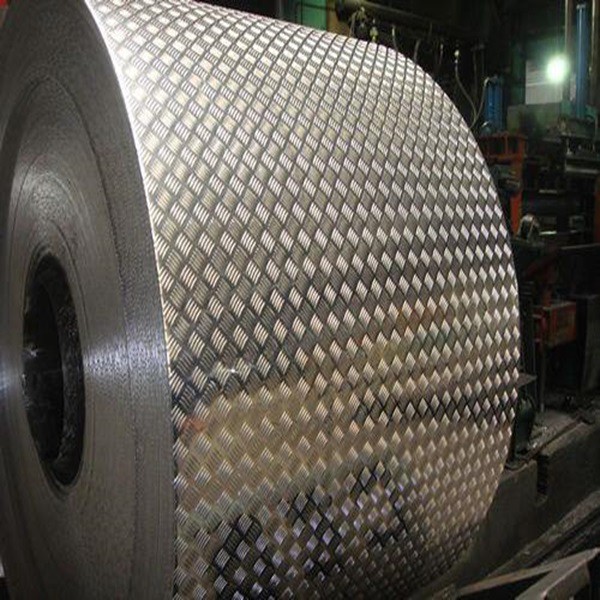
Aluminum tread coil, also known as Aluminum Tread Coil or Tread Aluminum Coil, is a type of aluminum coil with a raised pattern on its surface. This pattern provides enhanced grip and is commonly used in applications such as flooring, ramps, and transportation.
From a radiation - shielding perspective, aluminum has several properties that make it suitable for certain types of radiation protection.
Density and Atomic Number
Aluminum has a density of about 2.7 g/cm³, which is relatively low compared to heavy metals like lead (11.34 g/cm³). However, its atomic number (Z = 13) is high enough to interact with radiation. When it comes to beta particles, aluminum can effectively stop them. The electrons in the aluminum atoms interact with the beta particles through Coulomb forces, causing the beta particles to lose energy and eventually be absorbed.
For gamma rays, although aluminum is not as effective as lead, it can still provide some degree of shielding. The interaction of gamma rays with aluminum involves the photoelectric effect, Compton scattering, and pair production. The probability of these interactions depends on the energy of the gamma rays and the thickness of the aluminum.
Thickness and Shielding Effectiveness
The thickness of the aluminum tread coil plays a crucial role in its radiation - shielding effectiveness. As the thickness increases, the probability of radiation interacting with the aluminum atoms also increases. For beta particles, a few millimeters of aluminum can provide sufficient shielding. For gamma rays, thicker aluminum sheets or multiple layers of aluminum may be required.
In addition to its radiation - shielding properties, aluminum tread coil has other advantages. It is lightweight, corrosion - resistant, and easy to fabricate. These properties make it a practical choice for applications where both radiation protection and other functional requirements are needed.
Applications of Aluminum Tread Coil in Radiation Shielding
The radiation - shielding properties of aluminum tread coil make it suitable for a variety of applications.
Medical Facilities
In medical imaging departments, such as X - ray and CT scan rooms, aluminum tread coil can be used to line the walls and floors. While it may not be sufficient to completely block all X - rays, it can reduce the scattered radiation, protecting the staff and patients in adjacent areas. The raised pattern on the coil also provides a non - slip surface, which is important for safety in these high - traffic areas.
Nuclear Power Plants
In nuclear power plants, aluminum tread coil can be used in areas where beta particle radiation is a concern. For example, it can be used in the containment of radioactive waste storage areas or in the access walkways near low - level radiation sources. The corrosion resistance of aluminum is particularly beneficial in the harsh environment of a nuclear power plant.
Space Exploration
In space, astronauts are exposed to various types of radiation, including solar flares and cosmic rays. Aluminum is a common material used in spacecraft construction due to its lightweight and radiation - shielding properties. Aluminum tread coil can be used in the interior of spacecraft to provide additional protection for the crew and sensitive equipment. The raised pattern can also help in securing equipment and providing a better grip for the astronauts.
Comparison with Other Radiation - Shielding Materials
When compared to other radiation - shielding materials, aluminum tread coil has its own advantages and limitations.
Lead
Lead is a well - known radiation - shielding material, especially for gamma rays. It has a high density and atomic number, which allows it to absorb gamma rays more effectively than aluminum. However, lead is heavy, toxic, and more difficult to fabricate. Aluminum tread coil, on the other hand, is lightweight, non - toxic, and easy to work with. In applications where weight is a critical factor, such as in aerospace or mobile radiation - shielding devices, aluminum may be a better choice.
Concrete
Concrete is another commonly used radiation - shielding material. It is relatively inexpensive and can be used to build large - scale shielding structures. However, concrete is bulky and not as flexible as aluminum tread coil. Aluminum can be easily formed into different shapes and sizes, making it suitable for applications where customized shielding solutions are required.
Our Company's Aluminum Tread Coil
As a supplier of Diamond Aluminum Coil and other aluminum products, we offer high - quality aluminum tread coil with excellent radiation - shielding properties. Our products are made from high - purity aluminum and undergo strict quality control procedures to ensure their performance.
We can provide aluminum tread coil in various thicknesses and patterns to meet the specific requirements of different applications. Whether you need a thin coil for medical shielding or a thicker one for nuclear power plant applications, we have the right product for you.
Contact Us for Purchase and Negotiation
If you are interested in our aluminum tread coil and its radiation - shielding properties, we invite you to contact us for further discussion. We have a team of experts who can provide you with detailed technical information and help you choose the most suitable product for your needs. Whether you are in the medical, nuclear, or aerospace industry, our aluminum tread coil can be a valuable addition to your radiation - shielding solutions.

References
- Knoll, Glenn F. Radiation Detection and Measurement. 4th ed., Wiley, 2010.
- Tsoulfanidis, Nicholas. Measurement and Detection of Radiation. 3rd ed., CRC Press, 2010.
- “Radiation Protection Principles and Practices.” International Atomic Energy Agency, 2014.