

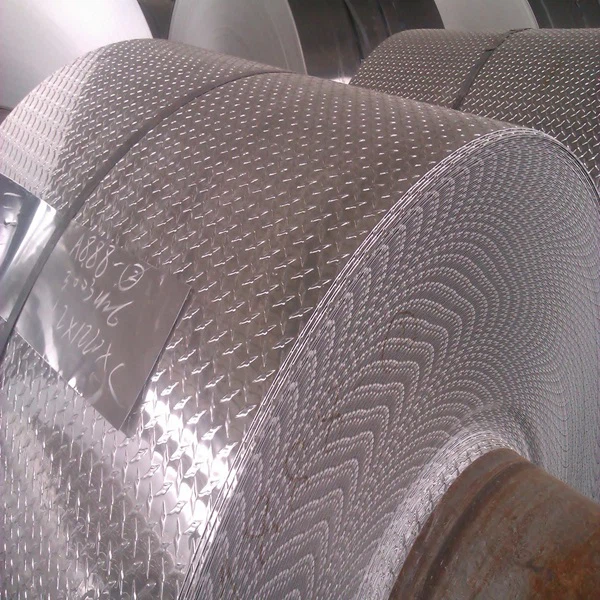
Aluminum tread coil is a highly versatile and widely used material in various industries, known for its distinctive surface pattern and excellent mechanical properties. As a leading supplier of Tread Aluminum Coil, I am well - versed in the intricacies of this product. In this blog, I will delve into the mechanical properties of aluminum tread coil, which play a crucial role in determining its suitability for different applications.
1. Strength and Hardness
Tensile Strength
The tensile strength of aluminum tread coil refers to the maximum amount of tensile stress that the material can withstand before breaking. Aluminum alloys used in tread coils typically have a tensile strength ranging from 100 MPa to 500 MPa, depending on the specific alloy composition and heat treatment. For instance, 3003 aluminum alloy, a common choice for tread coils, has a moderate tensile strength of around 110 - 150 MPa in the annealed state. This makes it suitable for applications where moderate strength is required, such as flooring in light - duty industrial settings.
On the other hand, 5052 aluminum alloy offers higher tensile strength, usually in the range of 215 - 230 MPa. This alloy is often used in more demanding applications, like shipbuilding and automotive components, where the material needs to withstand greater mechanical loads. The enhanced strength of 5052 alloy is due to the addition of magnesium, which forms a solid - solution strengthening mechanism within the aluminum matrix.
Yield Strength
Yield strength is the stress at which a material begins to deform plastically. It is an important property as it indicates the point beyond which the material will not return to its original shape after the load is removed. Aluminum tread coils generally have a yield strength that is a significant fraction of their tensile strength. For example, 3003 aluminum alloy has a yield strength of approximately 35 - 70 MPa in the annealed condition. This relatively low yield strength allows for some formability while still providing enough resistance to deformation under normal operating conditions.
5052 aluminum alloy, with a yield strength of around 170 - 200 MPa, offers better resistance to plastic deformation compared to 3003. This property is beneficial in applications where the material may be subjected to repeated loading, such as in the construction of ramps or platforms.
Hardness
Hardness is a measure of a material's resistance to indentation or scratching. Aluminum tread coils can have different levels of hardness depending on the alloy and the processing. The Brinell hardness of aluminum tread coils can range from around 20 - 100 HB. Alloys with higher levels of alloying elements and those that have undergone heat treatment tend to have higher hardness values. For example, 6061 aluminum alloy, which is heat - treatable, can achieve a Brinell hardness of up to 95 HB after proper heat treatment. This increased hardness makes it more suitable for applications where wear resistance is important, such as in the manufacturing of conveyor belts or machine parts.
2. Ductility and Formability
Ductility
Ductility is the ability of a material to be stretched or drawn into a wire or thin sheet without breaking. Aluminum tread coils are known for their good ductility, which allows them to be easily formed into various shapes. This property is particularly useful during the manufacturing process, where the coils can be rolled, bent, or stamped into different configurations. For example, the 3003 aluminum alloy, with its relatively high ductility, can be easily formed into complex shapes without cracking. This makes it a popular choice for fabricating decorative elements or custom - designed components.
Formability
Formability is closely related to ductility and refers to the ease with which a material can be shaped into a desired form. Aluminum tread coils exhibit excellent formability, which is an advantage in many industries. They can be cold - formed, which means they can be shaped at room temperature without the need for additional heating. This reduces the energy consumption and production costs during the manufacturing process. For instance, in the automotive industry, aluminum tread coils can be formed into body panels or interior components with high precision, thanks to their good formability.
3. Fatigue Resistance
Fatigue resistance is the ability of a material to withstand repeated loading without failing. Aluminum tread coils have relatively good fatigue resistance, especially when compared to some other metals. This property is important in applications where the material is subjected to cyclic loading, such as in bridges, staircases, and vibrating machinery.
The fatigue life of aluminum tread coils depends on several factors, including the alloy composition, the surface finish, and the magnitude of the applied stress. Alloys with fine - grained microstructures and those that have been properly heat - treated generally have better fatigue resistance. For example, 7075 aluminum alloy, which is a high - strength alloy, has good fatigue resistance due to its fine - grained structure and the presence of alloying elements like zinc and magnesium. This makes it suitable for use in aerospace applications, where components are subjected to repeated stress during flight.
4. Impact Resistance
Impact resistance is the ability of a material to absorb energy during an impact without fracturing. Aluminum tread coils offer decent impact resistance, which is an important property in applications where the material may be exposed to sudden impacts. The impact resistance of aluminum tread coils can be improved by using alloys with higher strength and toughness.
For example, 5083 aluminum alloy, which is known for its high strength and good corrosion resistance, also has relatively good impact resistance. This alloy is commonly used in the marine industry, where the hulls and decks of boats may be subjected to impacts from waves, floating debris, or collisions.
5. Corrosion Resistance
Aluminum tread coils have excellent corrosion resistance, which is one of their most significant advantages. Aluminum forms a thin, protective oxide layer on its surface when exposed to air, which prevents further oxidation and corrosion. This oxide layer is self - healing, meaning that if it is damaged, it will reform quickly to protect the underlying metal.
The corrosion resistance of aluminum tread coils can be further enhanced by using specific alloys and surface treatments. For example, 5052 aluminum alloy has better corrosion resistance than some other alloys, especially in marine environments. Additionally, coatings such as anodizing can be applied to the surface of the coils to improve their corrosion resistance and aesthetic appearance. Anodizing creates a thicker and more durable oxide layer on the surface of the aluminum, providing enhanced protection against corrosion, wear, and UV radiation.
Applications Based on Mechanical Properties
The unique combination of mechanical properties of aluminum tread coils makes them suitable for a wide range of applications. In the construction industry, they are used for flooring, stair treads, and wall cladding due to their strength, formability, and corrosion resistance. In the transportation industry, Aluminum Tread Coil is used in automotive and aerospace components, where their lightweight, high - strength, and good fatigue resistance are highly valued. In the marine industry, Diamond Aluminum Coil is commonly used for boat decks, hulls, and other structural parts because of their corrosion resistance and impact resistance.

Conclusion
In conclusion, the mechanical properties of aluminum tread coils, including strength, ductility, fatigue resistance, impact resistance, and corrosion resistance, make them a versatile and valuable material in various industries. As a supplier of aluminum tread coils, I understand the importance of these properties and how they can be tailored to meet the specific needs of different applications. Whether you are looking for a material for a small - scale project or a large - scale industrial application, aluminum tread coils offer a reliable and cost - effective solution.
If you are interested in purchasing aluminum tread coils or have any questions about their mechanical properties and applications, please feel free to contact me for a detailed discussion. I am committed to providing high - quality products and excellent customer service to meet your requirements.
References
- ASM Handbook, Volume 2: Properties and Selection: Nonferrous Alloys and Special - Purpose Materials.
- Aluminum Association Technical Papers on Aluminum Alloys and Their Properties.
- Metal Handbook Desk Edition, Third Edition.